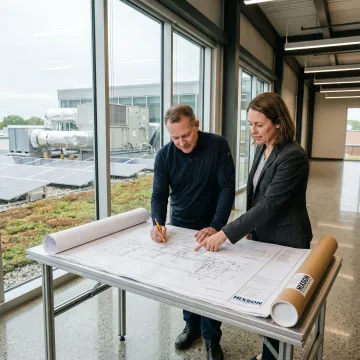
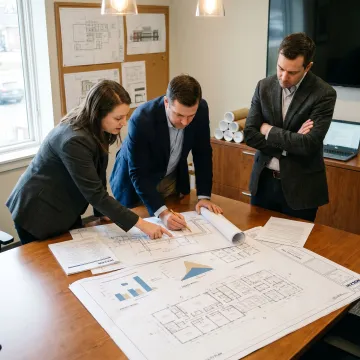
What does a sustainable designer do?
A sustainable designer evaluates how a building or facility uses energy, water, materials, land, and operating resources, then develops strategies to reduce environmental impact without compromising performance. At Hixson, that includes LEED consulting, energy and water audits, GHG reduction planning, net-zero facility strategies, building systems optimization, and engineering implementation aligned with client operations and compliance needs.
What are examples of sustainable design?
Examples include high-performance HVAC systems, daylighting, efficient building envelopes, low-impact material selection, water reuse systems, onsite renewable energy integration, process heat electrification, refrigerant transition planning, and facility layouts that reduce waste. For manufacturing and technical facilities, sustainable design can also include energy recovery, CIP water reuse, wastewater integration, and compliance-driven environmental improvements.
How does Hixson approach Sustainable Design Services?
Hixson begins by understanding the client’s facility, operations, sustainability goals, regulatory drivers, and business case. The team then identifies practical strategies across architecture, process engineering, mechanical and electrical systems, water use, emissions, and permitting. Recommendations can move from audits and planning into full design, documentation, procurement support, construction administration, and commissioning coordination.
Can sustainable design support LEED certification?
Yes. Hixson’s LEED Accredited Professionals help clients evaluate certification pathways, register projects, coordinate sustainable design decisions, and prepare documentation. Support may include energy and water audits, materials selection, indoor environmental quality strategies, daylighting analysis, and LEED documentation for BD+C, ID+C, and EBOM projects, depending on the building type and project goals.
What types of facilities benefit from sustainable design?
Sustainable design can benefit manufacturing plants, laboratories, pharmaceutical and biotech facilities, food and beverage operations, corporate workplaces, and mixed-use campuses. Facilities with high utility demand often gain significant value from energy recovery, water conservation, HVAC optimization, process efficiency, and emissions reduction strategies that improve resilience, compliance, and long-term operating performance.
Does Hixson help with net-zero carbon goals?
Yes. Hixson supports clients pursuing net-zero carbon goals for new construction and existing facility retrofits. Services can include onsite renewable generation integration, process heat electrification, energy recovery, HVAC and envelope optimization, refrigerant transition planning, and GHG reduction roadmaps that align facility improvements with corporate ESG or SBTi commitments.
Can sustainable design reduce operating costs?
Sustainable design often reduces operating costs by lowering energy use, water consumption, waste, maintenance burden, and compliance risk. Hixson evaluates ROI alongside environmental goals so recommendations are technically sound and financially practical. Common opportunities include water reuse, energy-efficient mechanical systems, process optimization, utility infrastructure improvements, and operational resilience strategies.
When should sustainability be considered in a project?
Sustainability should be considered as early as possible, ideally during feasibility, master planning, site selection, or concept design. Early decisions influence building orientation, utility infrastructure, system selection, process flow, materials, and permitting. Hixson integrates sustainability with architecture and engineering so environmental goals are built into the project rather than added as costly retrofits.