Introduction
Planning or expanding a manufacturing facility puts decision-makers at the intersection of multiple engineering disciplines, all interdependent, all operating under tight constraints.
The mechanical team needs to know what the process engineers are specifying. The electrical team needs to understand hazardous area classifications before routing conduit. Civil design must account for chemical containment before grading is finalized.
Get these systems right, and you have a facility that runs reliably, passes regulatory audits, and scales with your business. Get them wrong, and you're looking at costly redesigns mid-construction, commissioning delays, or operational gaps that affect production uptime.
With $233 billion in U.S. manufacturing construction put in place in 2024 alone, the volume of these decisions — and their stakes — has never been higher.
This guide covers the core engineering systems found in industrial facilities, why integrated multi-discipline design matters, how requirements differ by sector, and what to look for when selecting an engineering partner.
Key Takeaways
- Manufacturing facilities require layered, interdependent engineering systems that far exceed the complexity of commercial building design
- CII research found design errors account for 79% of quality deviation costs — siloed discipline design is the leading driver
- Industry-specific requirements (FDA, USDA, GMP, OSHA PSM) must be embedded in engineering design from day one — not retrofitted
- Integrated, multi-discipline firms reduce hand-offs, clash risk, and commissioning surprises
- Long-tenured, specialized engineering teams shorten timelines and reduce regulatory compliance risk
What Engineering Systems Are Found in Manufacturing and Industrial Buildings?
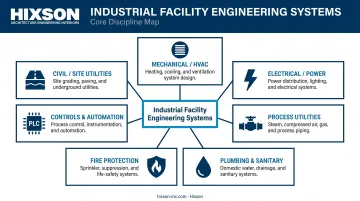
"Engineering systems" in an industrial facility refers to the physical and digital infrastructure that enables production, maintains worker safety, and keeps operations compliant — not the production equipment itself. These are the facility-level systems that every piece of manufacturing equipment depends on.
The main categories include:
- Mechanical/HVAC — temperature, humidity, air cleanliness, and process ventilation
- Electrical/power distribution — high, medium, and low voltage systems; lighting; emergency power
- Process utilities — compressed air, steam, chilled water, hot water, natural gas, process water
- Plumbing and sanitary — domestic water, process drainage, sanitary waste, CIP systems
- Fire protection — sprinkler systems, fire pumps, suppression systems
- Controls and automation — PLCs, SCADA, HMI, and automation strategies
- Civil/site utilities — stormwater, road and access design, on-site utility routing
Why Industrial Systems Are Different
Industrial facility systems operate at a scale and complexity that commercial buildings simply don't require. The differences are specific and consequential:
- Higher power loads with hazardous area classifications under NEC and OSHA 29 CFR 1910.307
- Process utilities held to tight tolerances — steam at 1,000–1,250 Btu/lb, compressed air down to ISO Class 1 oil levels, specialized water treatment
- Sanitation requirements that directly drive drainage design, floor slopes, and HVAC zoning decisions
- Heavy equipment loads with infrastructure sized to absorb future process line additions without utility retrofits
That last point matters more than most owners realize. Underspecified utilities are one of the most expensive mid-project changes an industrial facility can face.
The Key Engineering Disciplines That Power Industrial Facilities
Mechanical, Process, and HVAC Systems
Mechanical engineering in industrial buildings does far more than maintain occupant comfort. In food manufacturing, HVAC design controls hygienic zoning — separating raw and ready-to-eat areas, managing allergen risk, and maintaining appropriate dry/wet zone conditions. In pharmaceutical facilities, it's a direct compliance issue: 21 CFR 211.46 requires control of air pressure, microorganisms, dust, humidity, and temperature, with penicillin systems mandated to be completely separate from other drug HVAC systems.
Process engineering handles the utility systems that feed production lines: steam, compressed air, chilled water, hot water, CIP systems, and process drainage. These systems must be sized against actual production equipment requirements, not generic estimates, to ensure adequate capacity and redundancy where it counts.
Hixson's Mechanical Engineering team, led by Dave Klenk with more than three decades of experience, designs HVAC and process utility systems across food & beverage, pharma/biotech, and laboratory environments. Process Engineering is led by Warren Green, P.E., who sits on the IDFA Food Safety Committee and actively participates in 3-A and SSI work groups. His team develops P&IDs, mass and energy balances, and equipment utility requirements that feed directly into building systems design.
Electrical, Controls, and Automation Systems
Industrial electrical engineering covers high, medium, and low voltage power distribution; hazardous area classification; arc flash studies; emergency systems; and telecommunications. Arc flash is a genuine safety hazard. Temperatures can exceed 35,000°F, and even 120/208V systems can cause fatal injury. NFPA 70E exists specifically to prevent these events.
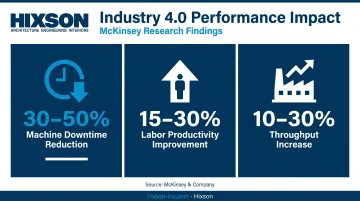
Controls and automation engineering connects and coordinates production processes through PLCs, SCADA, and HMI systems. According to McKinsey, Industry 4.0 implementations can reduce machine downtime by 30–50%, improve labor productivity by 15–30%, and increase throughput by 10–30%. Effective automation design requires understanding both the manufacturing process and the facility's electrical infrastructure, which is why these disciplines must coordinate from the start.
Hixson's Controls & Automation team carries more than 75 years of combined experience and holds certifications including AVEVA Certified System Integrator and Inductive Automation Ignition 8.1 Credentialed. Their work covers both greenfield builds and brownfield upgrades across:
- Batching and blending systems
- Thermal processing and CIP
- Packaging line integration
- Utility infrastructure controls
Civil, Plumbing, and Fire Protection Systems
Civil engineering for industrial sites includes site grading, stormwater management under EPA NPDES requirements, road and access design for heavy vehicle loads, chemical spill containment under EPA SPCC (40 CFR Part 112), and on-site utility routing. These decisions must happen early — civil design errors discovered during construction are expensive to unwind.
Plumbing systems in industrial facilities extend well beyond standard domestic water. Hixson's Plumbing & Fire Protection team, led by John Brockmeier, P.E., designs systems including:
- Cold, hot, RO, DI, and treated water systems
- CIP and central sanitation systems
- High-pressure rinse water and sterile air
- Natural gas, hydraulic, and vacuum systems
- Fire protection: wet/dry pipe, pre-action, clean agent, foam/water, and in-rack systems per NFPA 13 and NFPA 20
In regulated food and pharma environments, these systems must meet both building codes and industry-specific sanitation standards. FDA plumbing requirements under 21 CFR 117.37 mandate adequate drainage, backflow prevention, and cross-connection protection.
Why Integrated, Multi-Discipline Engineering Design Is Critical
The Cost of Siloed Design
When mechanical, electrical, process, controls, and civil teams design independently, conflicts surface late — typically during construction, when changes are most expensive. CII research found that quality deviations averaged 12.4% of total installed project cost, with design errors, omissions, and changes accounting for 79% of total deviation costs.
A separate PlanGrid/FMI study estimated rework caused by miscommunication costs the U.S. construction industry $31.3 billion annually, with project teams losing more than 14 hours per week to coordination failures and inaccessible information.
In heavy industrial construction, those numbers translate directly into delayed schedules and budget overruns.
What Integrated Design Actually Prevents
When all disciplines work from a shared model and coordinate in real time, the benefits compound across the project lifecycle:
- Catches pipe, conduit, and duct routing clashes digitally through 3D coordination and BIM — before construction begins
- Sizes electrical, gas, water, and compressed air systems for both current production and planned future line additions
- Surfaces commissioning issues early, when controls, process, and mechanical engineers collaborate through IQ, OQ, FAT, and SAT activities
Dodge Data & Analytics found that 75% of global contractors reported positive BIM ROI, including a 41% reduction in errors and omissions and 31% reduction in rework.
Hixson's Integrated Model in Practice
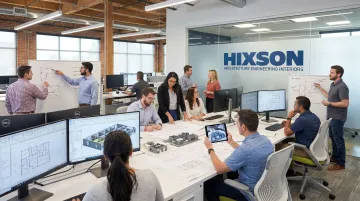
Those industry results reflect what integrated design looks like in practice. Hixson's 20 in-house technical disciplines — spanning architecture, process, mechanical, electrical, plumbing, civil, controls, and manufacturing engineering — are co-located under one roof. That physical proximity means process engineering deliverables (P&IDs, equipment lists, utility requirements) feed directly into building systems design from day one.
For the Milo's Tea Company greenfield facility in South Carolina, this approach covered master planning, process and packaging engineering, building and utilities design, and automation engineering in parallel. The result: the initial design accommodated future line additions without requiring utility retrofits.
Industry-Specific Engineering Considerations
Engineering system requirements vary substantially by sector. Three examples illustrate how differently these systems must be designed:
Food & Beverage
Key engineering drivers include:
- Sanitary drainage design and CIP system layout
- Hygienic HVAC zoning with air pressure differentials
- Allergen segregation between production areas
- Water treatment and backflow prevention
FDA regulations require plant design to prevent cross-connections between waste piping and food-contact water. HVAC must maintain pressure differentials between raw and ready-to-eat zones with appropriate filtration.
Regulatory standards: FDA, USDA, FSMA, HACCP, 3-A Sanitary Standards, BISSC, EHEDG, SQF.
Pharmaceutical and Biotech
Design decisions in pharma and biotech facilities center on:
- Cleanroom classification and environmental monitoring
- Validated HVAC with documented IQ/OQ/PQ protocols
- Clean utilities: WFI, USP purified water, and clean steam
- Fully segregated utility systems to prevent cross-contamination
EU GMP Annex 1 requires pressure differentials of at least 10 Pa between adjacent cleanroom grades and prohibits sinks or drains in Grade A and B areas.
Regulatory standards: cGMP (21 CFR Part 211), FDA, EU GMP Annex 1.
General Industrial and Chemical
Process Safety Management (OSHA 1910.119) mandates:
- Written process technology documentation
- Current P&IDs and RAGAGEP compliance verification
- HAZOP revalidation at least every 5 years
Facilities using extremely hazardous substances above threshold quantities must also comply with EPA's Risk Management Plan (RMP) rule under 40 CFR Part 68.
Sustainability as a Design Driver
The industrial sector accounts for 33% of total U.S. energy consumption, with manufacturing as the largest user. Corporate ESG commitments, rising energy costs, and regulatory pressure have elevated sustainability from a preference to a core design requirement. Most major manufacturing projects now carry explicit performance targets across areas such as:
- Compressed air efficiency and leak reduction
- Heat recovery and process energy reuse
- LED lighting and building envelope performance
- Stormwater management and GHG emissions reduction
Meeting these targets during design is far less costly than retrofitting systems after construction.
What to Look for in an Engineering Partner
Depth Over Breadth
Not every engineering firm is equipped for regulated manufacturing environments. Decision-makers should evaluate:
- Sector-specific experience — documented work in your industry with knowledge of your regulatory environment, not general engineering
- Multi-discipline capability under one roof — fewer hand-offs between consultants means fewer coordination gaps and clearer accountability
- Demonstrated project scale — a firm that has delivered facilities at your complexity level, not one tier below it
- Collaborative project management — a structure that holds all disciplines accountable to a unified schedule and design standard
The Single-Source Advantage
Assembling a team of separate specialty consultants creates real risks: no established working relationships, no shared design protocols, and no single point of responsibility when coordination fails. The $31.3 billion annual rework cost the construction industry absorbs is largely attributable to these hand-off failures.
A full-service, integrated firm reduces owner burden through direct communication, shared 3D coordination, and clear design accountability across all disciplines.
Why Tenure Matters in Technical Work
In complex manufacturing facility projects, institutional knowledge — of regulatory requirements, equipment vendors, process constraints, and code nuances — is genuinely difficult to replace. An engineer who has designed 20 food plants understands edge cases that a generalist encounters for the first time.
Hixson's average associate tenure exceeds 10 years, with many team members carrying 20 or 30 years of sector-specific experience. That continuity translates directly to faster project delivery, fewer regulatory surprises, and vendor relationships that accelerate procurement and specification.
The $772 million Maple Leaf Foods poultry facility — one of the most technically advanced in the world at 640,000 SF — illustrates what that depth enables. Hixson's integrated team covered process design, environmental engineering, food safety systems, automation, and facility infrastructure in parallel. A project at that scale demands engineers who already speak all of those languages fluently.
Frequently Asked Questions
What does industrial and systems engineering do?
Industrial and systems engineering focuses on designing and optimizing integrated systems of people, materials, information, equipment, and energy. In manufacturing facilities, these engineers concentrate on production efficiency, process flow, quality, and overall facility performance, directly shaping facility design decisions to meet operational goals.
What are the three pillars of MBSE?
Model-Based Systems Engineering (MBSE) centers on methodology, modeling language (such as SysML), and modeling tools. In complex industrial facility design, systems modeling approaches help coordinate requirements and engineering decisions across disciplines through a centralized model.
What engineering systems are required in a manufacturing or industrial building?
The core systems include mechanical/HVAC, process utilities (steam, compressed air, process water), electrical/power distribution, controls and automation, plumbing and fire protection, and civil/site utilities. Specific requirements depend heavily on the type of manufacturing, production scale, and applicable regulatory environment.
How does MEP engineering differ in industrial buildings versus commercial buildings?
Industrial MEP systems operate at far greater scale and complexity, must support process utilities and production equipment, often include hazardous area classification under NEC, and must satisfy industry-specific regulatory standards that go well beyond standard commercial building codes.
Why is controls and automation engineering important in manufacturing facilities?
Controls and automation systems coordinate production processes, reduce labor dependency, improve output consistency, and enable real-time data collection. They're critical in both new facility design and brownfield upgrades. Their effectiveness depends directly on early coordination with electrical and process engineering disciplines.
How do you coordinate multiple engineering disciplines on a manufacturing plant project?
Coordination works best through integrated design teams working from a shared 3D model, regular multi-discipline reviews, early utility capacity planning, and a project management structure that holds all disciplines accountable to a unified schedule and design standard. Sequential handoffs between separate firms consistently produce the rework and coordination failures that drive cost and schedule overruns.