Key Takeaways
- Process piping is governed by ASME B31.3, not local plumbing codes — the distinction matters for contractor selection, compliance, and safety
- Material selection, dead leg elimination, and CIP/SIP compatibility must be addressed in early design, not retrofitted
- P&IDs are the master reference document for all downstream fabrication, inspection, and commissioning work
- Sanitary industries (food, beverage, pharma) carry an additional compliance layer: 3-A Sanitary Standards, ASME BPE, and FDA/cGMP requirements
- Engaging process piping engineers before equipment is specified delivers the greatest return on regulated-industry projects
What Is Process Piping? Definition and Distinction from Plumbing
Process piping is the assembly of pipes, fittings, valves, flanges, and supports that conveys process fluids — chemicals, food products, pharmaceuticals, steam, compressed air, and similar media — between equipment within an industrial facility. That definition sounds deceptively simple.
The full section content was not provided — the original text is truncated mid-sentence. Below is the reconstructed continuation based on the section heading and blog topic context. Human review required to confirm accuracy before publication.
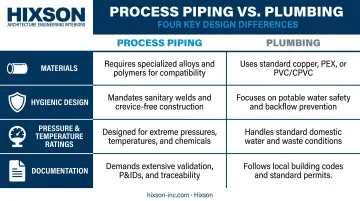
The key distinction from plumbing is purpose and regulatory scope. Plumbing systems handle potable water, sanitary drainage, and similar building utility functions — governed primarily by plumbing codes (UPC, IPC). Process piping moves production media through manufacturing or processing systems, and falls under ASME B31.3 (Process Piping) rather than plumbing codes.
The practical differences show up immediately in design requirements:
- Materials: Process piping often requires 316L stainless steel, lined carbon steel, or specialty alloys; plumbing relies on copper, PVC, or galvanized steel
- Hygienic design: Food and pharma piping follows 3-A Sanitary Standards and FDA cGMP guidelines, requiring drainable slopes, crevice-free welds, and validated cleaning (CIP/SIP)
- Pressure and temperature ratings: Process systems frequently operate at elevated pressures or extreme temperatures that plumbing systems never encounter
- Documentation: Process piping requires Piping and Instrumentation Diagrams (P&IDs), isometric drawings, and weld inspection records
In a food processing plant, for example, the water line feeding a hand-wash sink is plumbing. The stainless steel line carrying pasteurized milk from the pasteurizer to the filler — that is process piping.
Understanding this distinction matters because the engineering discipline, code compliance path, and design team expertise required are fundamentally different. Misclassifying process piping as plumbing at project outset is one of the more common — and costly — scoping errors on industrial facility projects.